
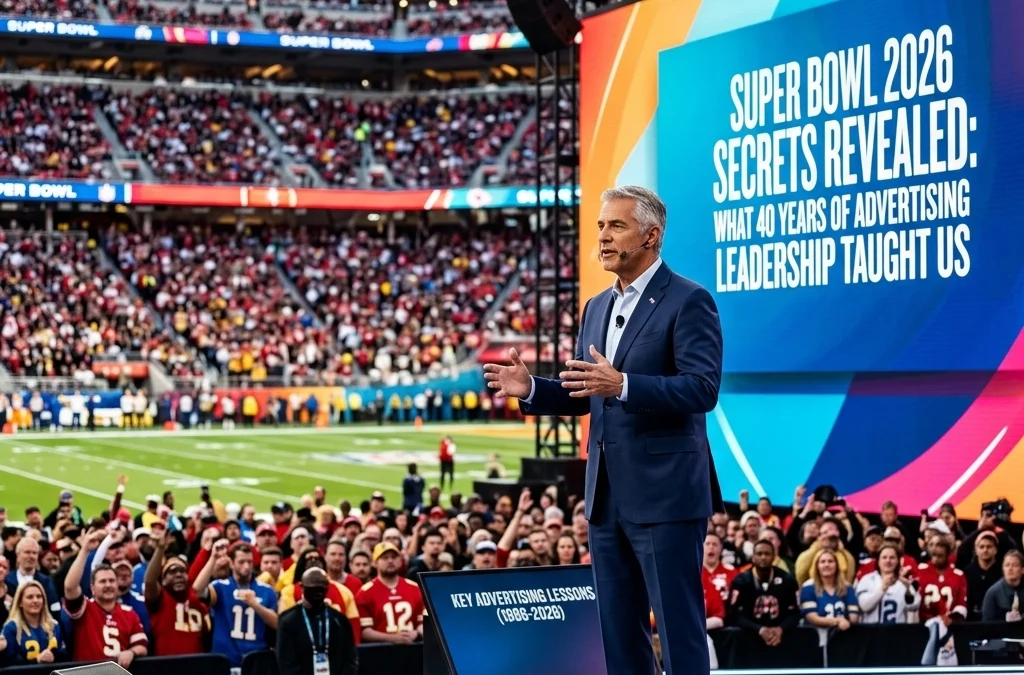
The Super Bowl represents the pinnacle of American sports and the absolute zenith of global advertising. As the 2026 season concludes, the industry is looking back at four decades of leadership to understand how the landscape has shifted from simple television commercials to an immersive, venue-wide experience. Advertising at this level is no longer about a single moment in time. It is about a continuous, multi-sensory journey that begins miles from the stadium and follows the fan directly to their seat.
Leadership in this space requires a deep understanding of how fans interact with their environment. Over the last 40 years, the strategy has evolved from capturing attention to dominating the physical space. In 2026, the secrets of successful campaigns rely on a combination of heritage, data, and the aggressive use of Out of Home (OOH) technology.
The Strategy of Total Venue Saturation
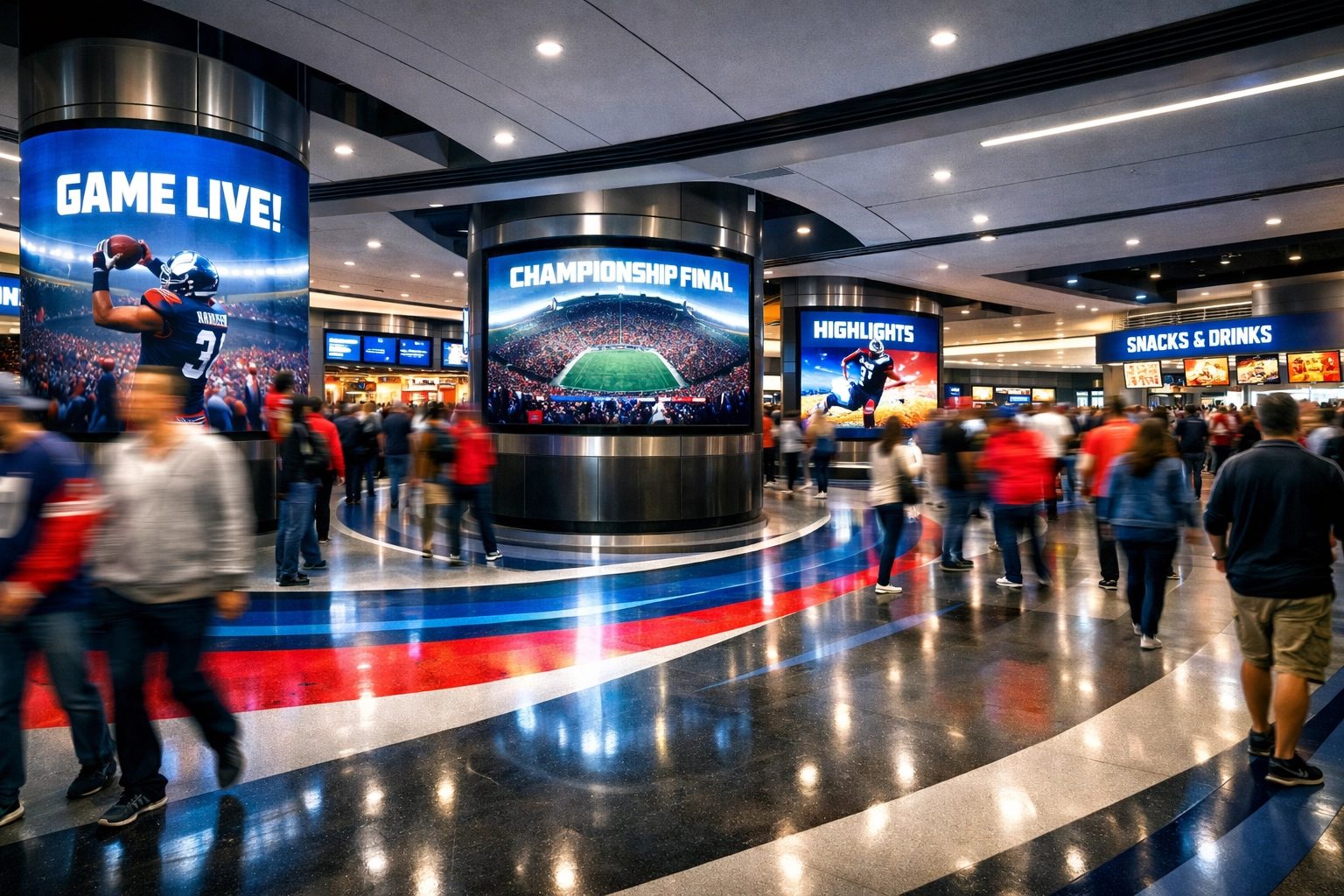
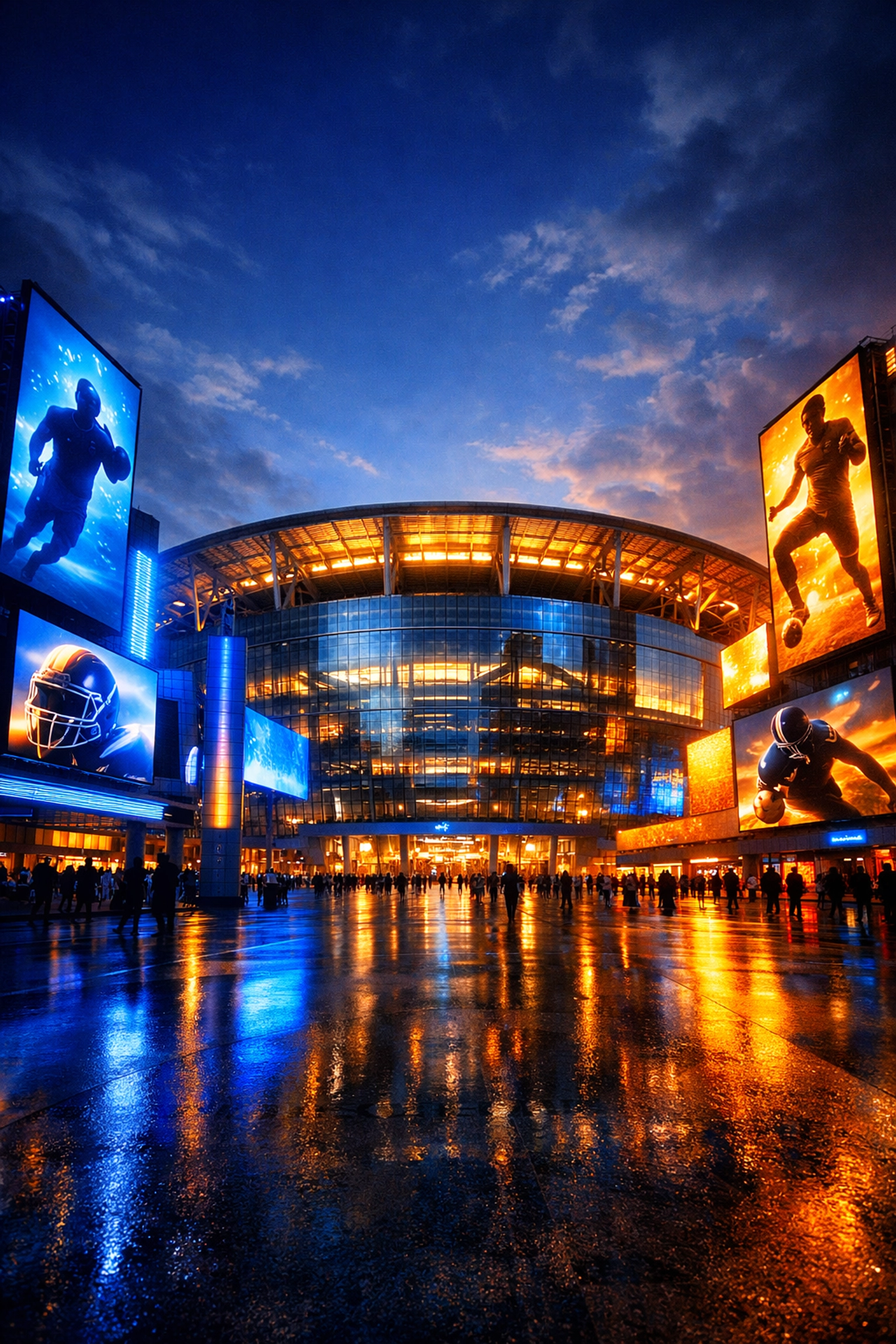
Modern Super Bowl advertising strategies have moved beyond the confines of the television screen. The primary objective for top tier brands in 2026 is total venue saturation. This approach ensures that a brand is visible at every possible touchpoint, from the floors of the concourse to the massive digital billboards overlooking the stadium.
By utilizing a mix of traditional static media and cutting-edge digital displays, advertisers create a "surround sound" effect for the eyes. The goal is to make the brand synonymous with the event itself. This is achieved through meticulous planning and a 40-year legacy of understanding crowd flow and fan psychology. When a fan enters the stadium, they are greeted by floor graphics that lead them toward branded lounges. Above them, high definition screens flash real-time updates, all sponsored by the same entity. This level of coverage ensures that the message is impossible to ignore.
40 Years of Advertising Leadership
The history of Super Bowl advertising is a story of constant innovation. Forty years ago, the focus was almost entirely on the broadcast. Today, leadership in the field means recognizing that the stadium is a live medium. OOH Sports has tracked this shift, noting that the most successful campaigns are those that leverage the physical architecture of the venue.
Leadership in 2026 involves more than just buying space. It involves creating a cohesive narrative that spans across different formats. The lessons learned over the last four decades show that consistency is key. A brand that appears on a highway billboard on the way to the game, on a digital kiosk at the gate, and on the perimeter fencing of the field creates a sense of ubiquity. This strategy relies on programmatic digital out-of-home (DOOH) technology to sync messaging across thousands of screens simultaneously.
For more insights into how these strategies have evolved, the analysis of how 25,000 digital screens are changing sports marketing provides a clear picture of the current scale of the industry.
Objective and Execution
The primary objective for 2026 campaigns is to maximize Return on Investment (ROI) by targeting high-value audiences in high-intent moments. The execution of these campaigns involves several layers of technology and logistics.
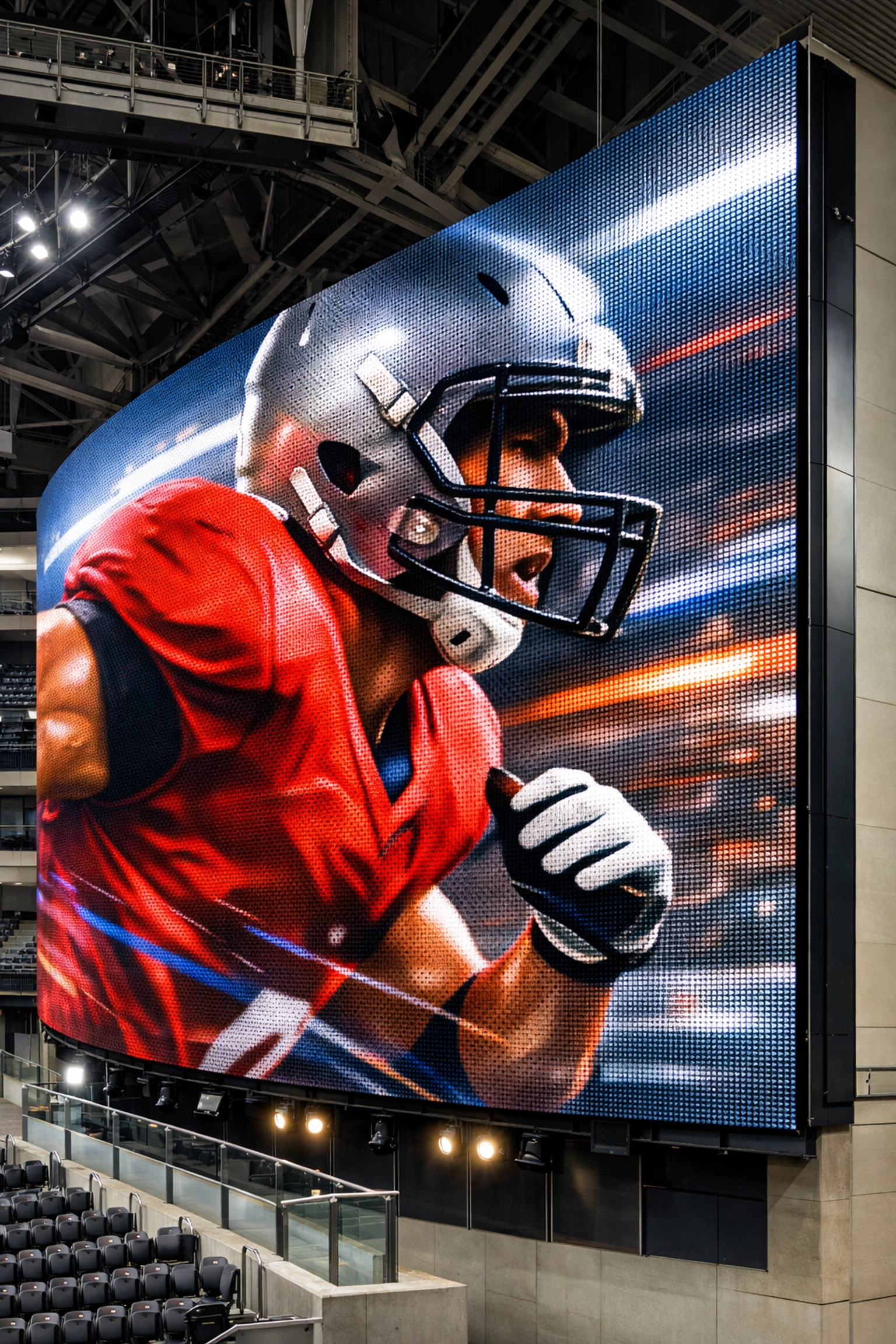
- Perimeter Targeting: Using digital displays around the field of play to capture both the live audience and the millions watching the broadcast.
- Concourse Domination: Placing advertisements on every available surface, including floors, pillars, and walls, to maintain brand presence during breaks in play.
- Real-Time Integration: Leveraging live game data to update ad creative instantly, such as celebrating a touchdown or a field goal in real-time.
- Mobile Synchronization: Using geofencing to send push notifications or social media prompts to fans who are in the proximity of a physical OOH advertisement.
The following video illustrates the power of modern sports marketing and the energy required to capture the attention of a global audience.
https://www.youtube.com/watch?v=l6J-0zileKE
The Role of Programmatic DOOH
The rise of programmatic DOOH has been the single most significant change in the last decade. In 2026, advertisers no longer need to book screens months in advance with static images. Instead, they use data-driven platforms to bid on ad space in real-time. This allows for a level of flexibility that was previously unthinkable.
A brand can choose to increase its visibility during the halftime show or pivot its messaging based on which team is winning. This agility is a hallmark of modern advertising leadership. It allows for a more efficient use of budget and ensures that the creative is always relevant to the current mood of the stadium. This technology is a core component of how DOOH sports advertising is expected to hit $50 billion by 2030.

Technology Partners and Mechanics
The mechanics of a venue-wide campaign involve a complex network of technology partners. From the hardware manufacturers who provide the LED screens to the software developers who manage the programmatic auctions, every piece must work in harmony.
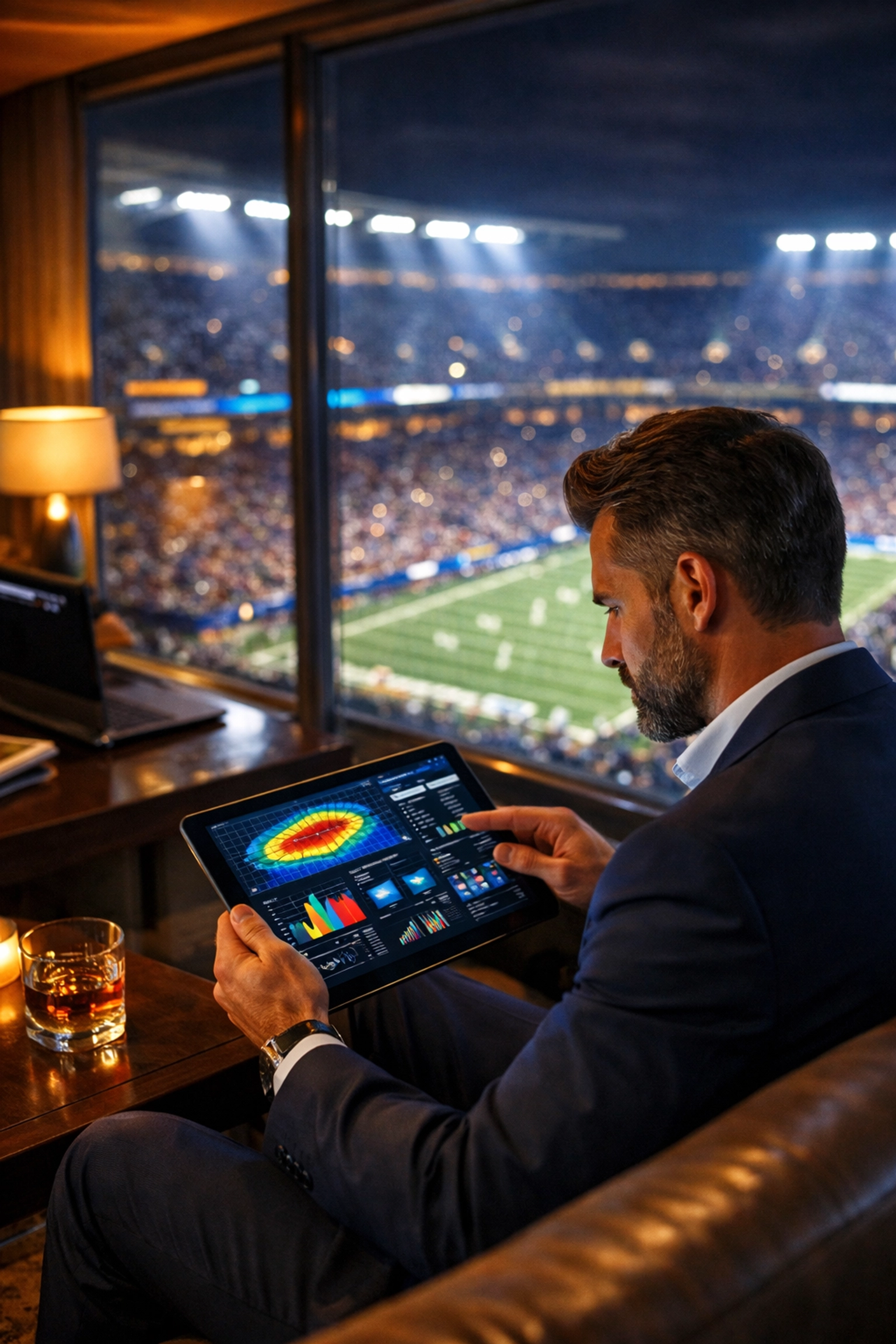
In 2026, AI-powered analytics play a crucial role in measurement. By using anonymous audience detection and mobile location data, advertisers can track exactly how many people viewed an ad and how they reacted. This data proves the success of the campaign and provides a roadmap for future events. The move toward AI-powered analytics fixes many of the mistakes made with traditional measurement.
Quantifiable Results in 2026
The data from the 2026 Super Bowl highlights the massive financial impact of these advanced advertising strategies. It has been reported that the average Super Bowl advertisement in 2026 achieved a return of $5.20 for every dollar invested. This high ROI is a direct result of the move toward venue-wide coverage and programmatic precision.
When comparing traditional stadium ads to programmatic DOOH, the results are clear. Campaigns that utilize digital, real-time updates see a significantly higher lift in brand awareness and purchase consideration. For instance, recent studies show that programmatic DOOH campaigns can drive over a 100% lift in positive brand image.
Key Performance Indicators (KPIs) from 2026:
- Average ROI: $5.20 per $1 spent.
- Brand Recall: 85% among fans inside the stadium.
- Social Media Amplification: 40% increase in brand mentions during the game period.
- Foot Traffic Attribution: 25% increase in visits to partner retail locations within 48 hours of the event.
From Floors to Billboards: A Unified Vision
The secret to 40 years of success in this industry is a unified vision. A campaign must feel like a single, cohesive thought, even if it is spread across hundreds of different formats. Whether a fan is looking down at a branded floor graphic or up at a massive billboard, the message must be clear and consistent.
This venue-wide coverage creates an environment where the brand is not just a sponsor, but a part of the event's DNA. It is the difference between an advertisement and an experience. As the industry moves forward, the lessons from the 2026 Super Bowl will serve as the benchmark for all future sports marketing efforts. The shift is permanent. Advertisers who fail to embrace the full spectrum of OOH opportunities will find themselves left behind in an increasingly digital world.
The Future of Sports Advertising
Looking toward 2030 and beyond, the trend of venue-wide domination will only intensify. The integration of augmented reality (AR) and even more sophisticated AI will allow for hyper-personalized advertising within the stadium. However, the core principles established over the last 40 years will remain.
Advertising leadership is about understanding the audience and having the courage to dominate the space. By combining the physical presence of billboards and floor graphics with the digital power of programmatic DOOH, brands can achieve results that were once thought impossible. The 2026 Super Bowl has proven that when a brand takes over a venue, the return on investment is not just a number, it is a legacy.
For those looking to capture their share of the growing market, staying informed on the latest strategies is essential. The sports DOOH gold rush is currently driving 67% of media planners to shift their budgets, proving that the time to act is now. The secrets revealed by 40 years of leadership are simple: be visible, be consistent, and use every inch of the venue to tell your story.