
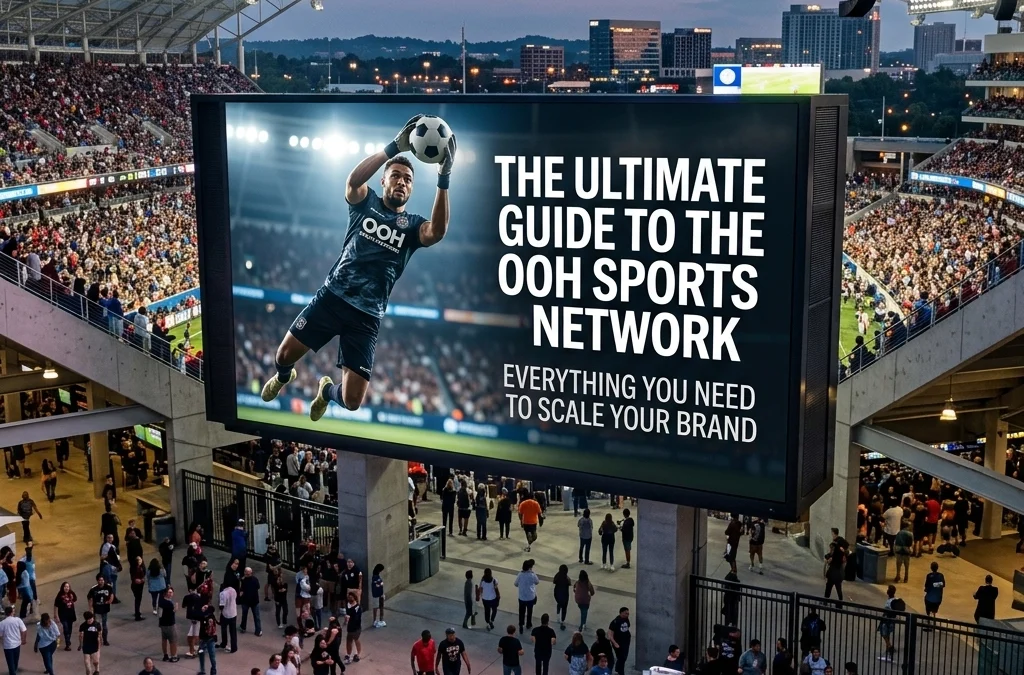
The landscape of sports marketing is undergoing a fundamental shift as digital out-of-home (DOOH) advertising moves from a supplementary tactic to a primary growth driver for global brands. OOH Sports has reached a significant milestone in this evolution, establishing a network that now spans more than 25,000 digital screens. This expansion represents a critical infrastructure for media buyers and brand managers who require precision, scale, and measurable ROI in the sports vertical.
By integrating high-impact visual displays with real-time programmatic capabilities, the OOH Sports network offers an alternative to traditional, static stadium sponsorships. This guide details the strategic mechanics of the network and how brands utilize these assets to scale their market presence.

The Strategic Expansion of the OOH Sports Network
The growth of the OOH Sports network is a direct response to the increasing demand for non-intrusive yet high-impact advertising. Traditional digital ads often suffer from ad-blocking or low engagement due to "scroll fatigue." In contrast, the OOH Sports network places brand messaging in physical environments where fans are naturally inclined to look.
The network expansion focuses on three core pillars:
- Increased Density in Major Markets: Ensuring that every major sporting event has a surrounding digital footprint.
- Technological Integration: Linking screens to programmatic DSPs for real-time bidding and execution.
- Audience Analytics: Implementing advanced tracking to provide brands with verified impression data and conversion metrics.
Objective and Strategy: The Power of Decision Zones
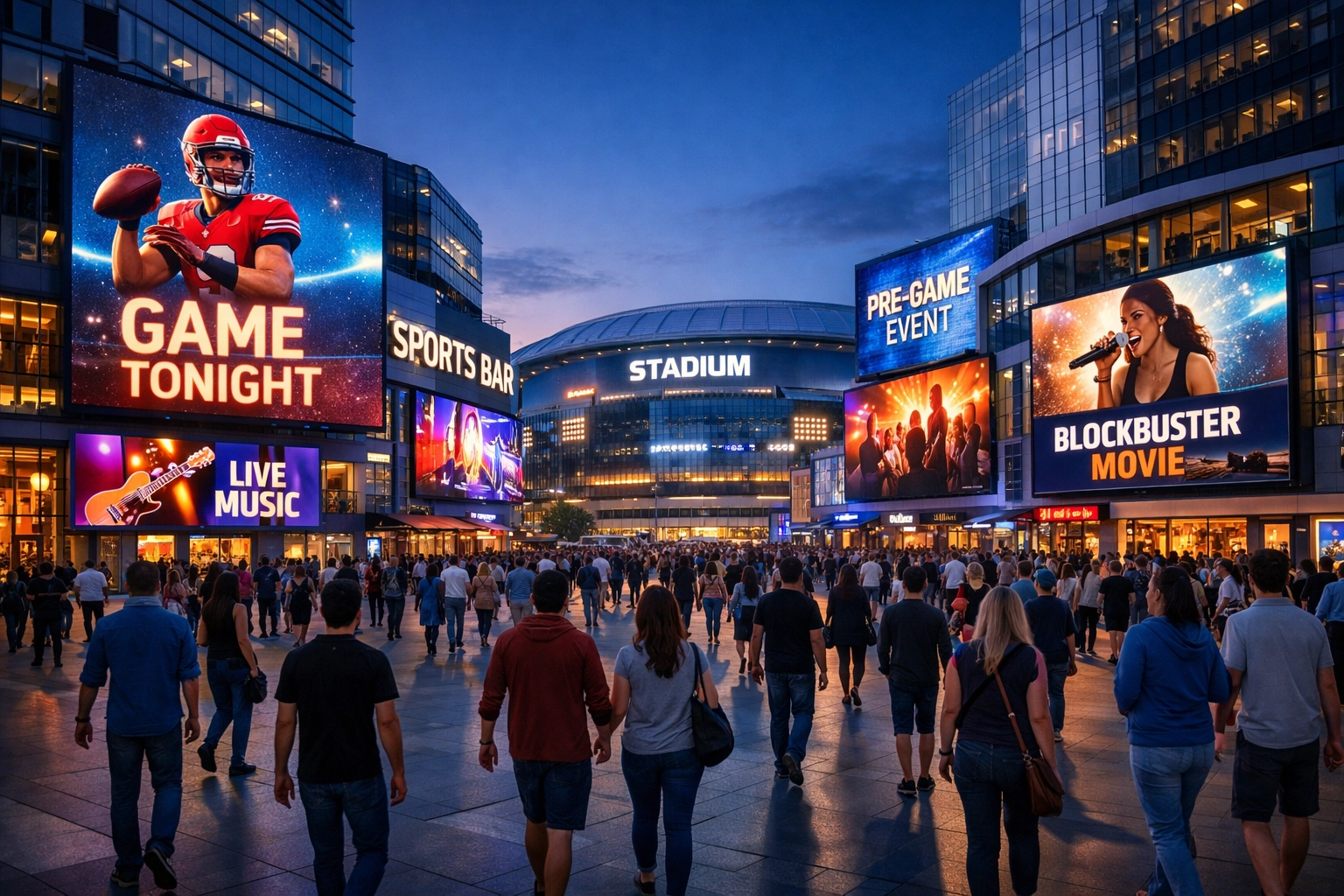
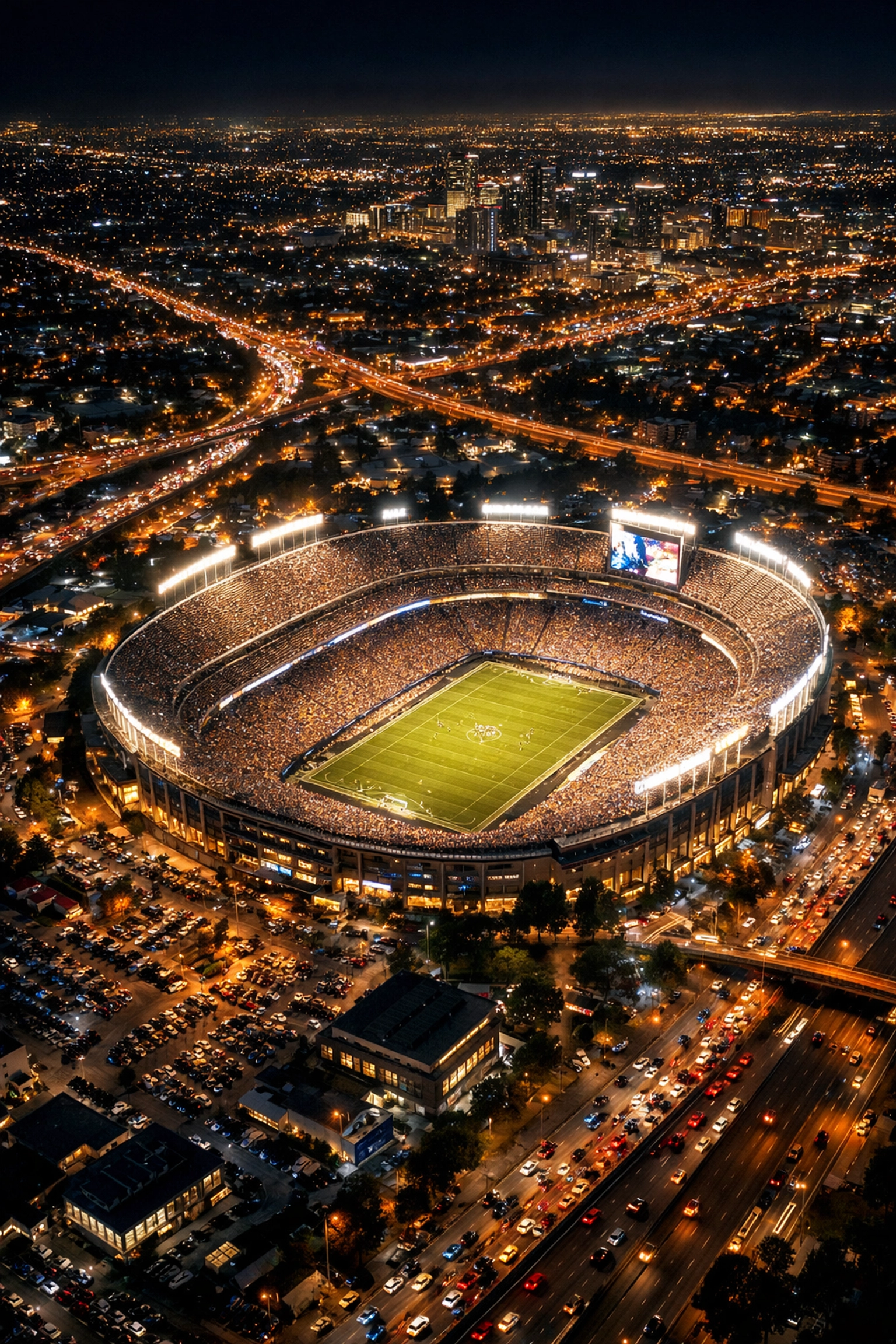
A central strategy of the OOH Sports network involves the placement of assets within "Decision Zones." These are specific geographical areas where consumer behavior is most influenced by external stimuli. The strategy is to capture fan attention during the 30-60 minutes before an event and the hours following it.
The network utilizes four primary Decision Zones:
- Stadium Perimeters: Capturing the high-density traffic of fans arriving at the venue.
- Entertainment Districts: Engaging consumers in areas featuring bars, restaurants, and retail outlets surrounding the stadium.
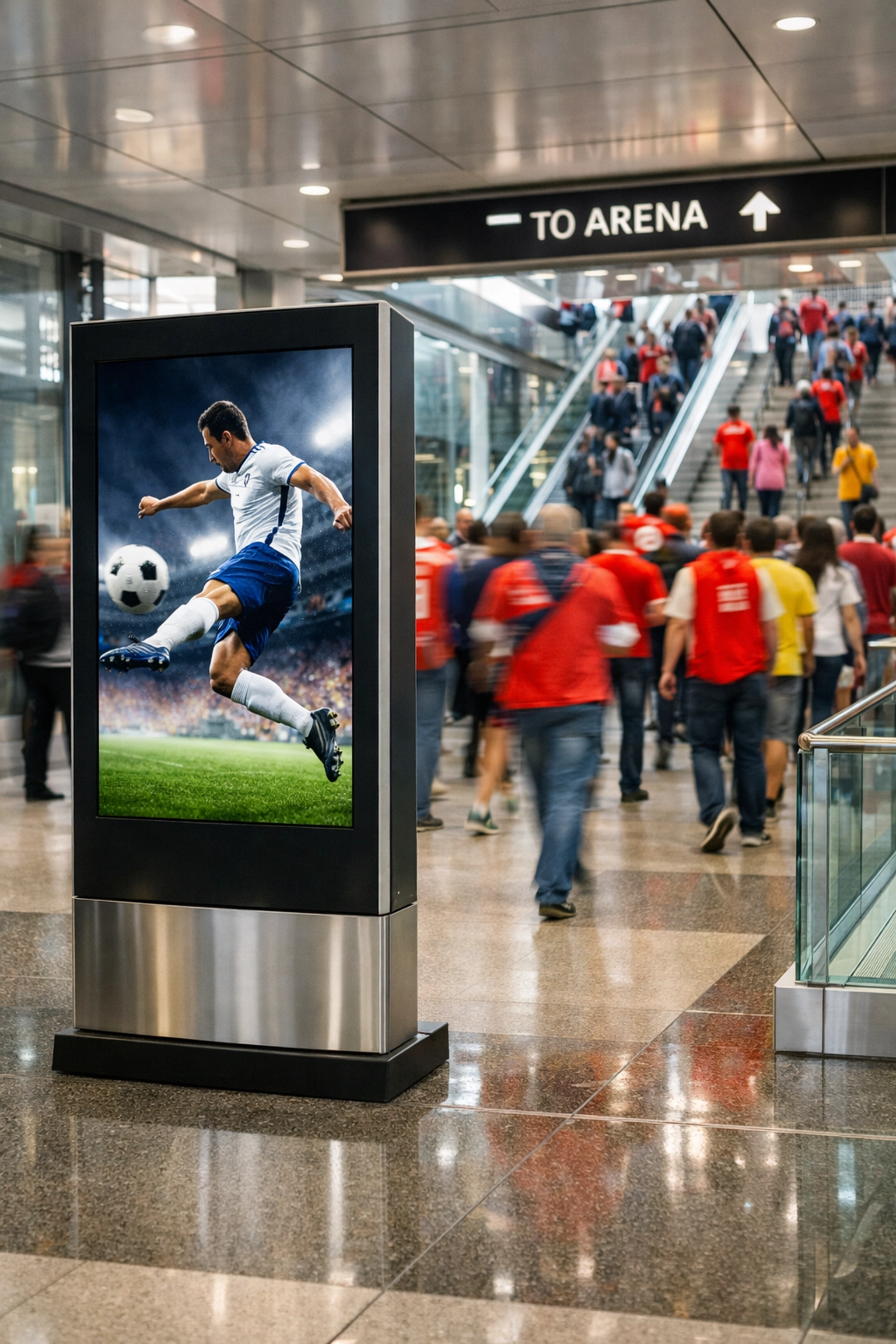
- Transit Wait Points: Reaching fans at rideshare lots, shuttle queues, and rail platforms where dwell times are high.
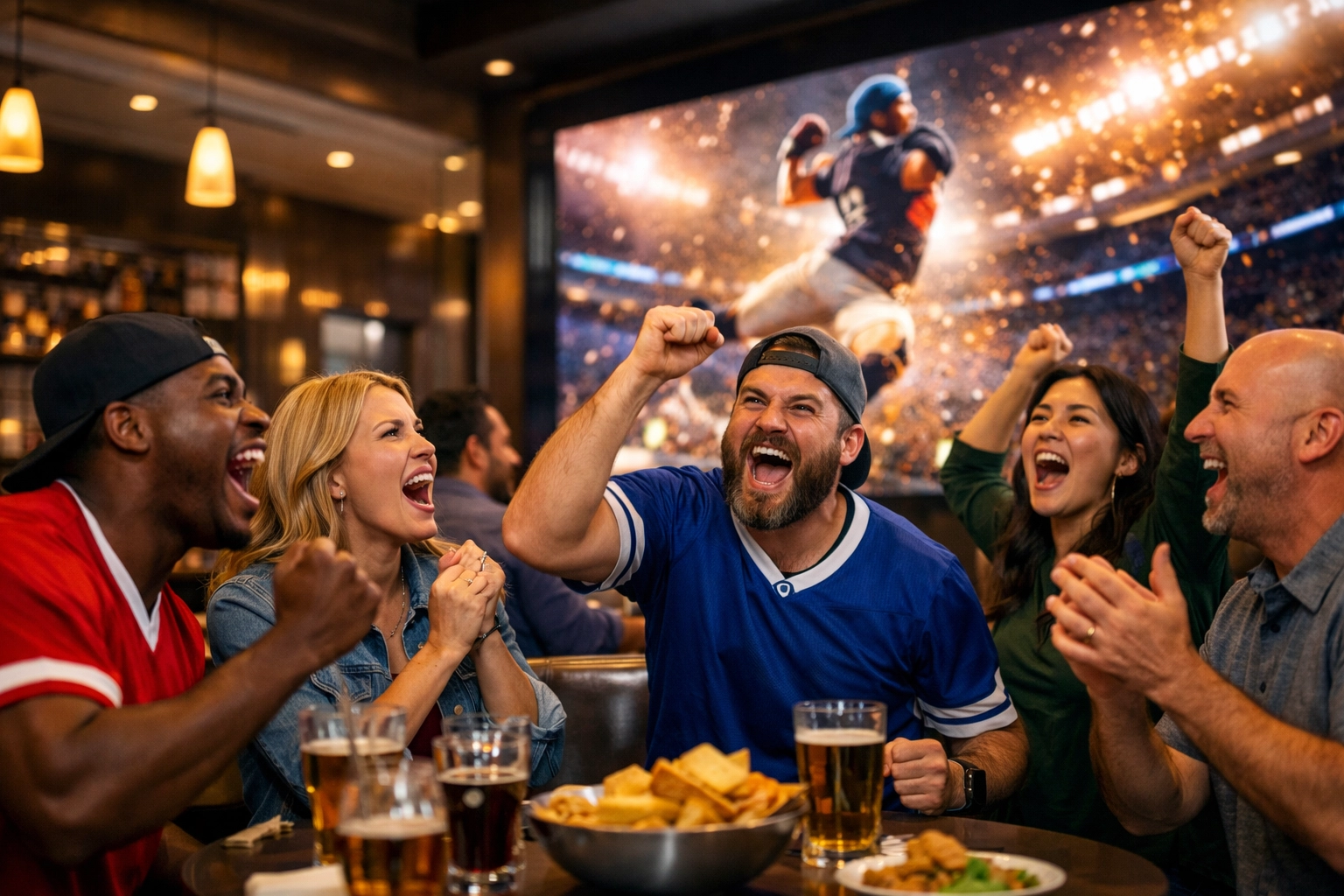
- Post-Game Hangouts: Maintaining brand presence in sports-centric hospitality venues where game outcomes are discussed.
By dominating these zones, brands create a "surround sound" effect that makes a campaign feel much larger than its actual budget might suggest. This is particularly effective for brands that are not official stadium sponsors but wish to capture the same audience. For example, successful campaigns have shown that smart brands scale with perimeter DOOH for 80 percent less than the cost of a traditional 2 million dollar stadium sponsorship.
Technology Partners and Programmatic Execution
The OOH Sports network operates through a sophisticated technological stack. The integration with partners like the StackAdapt DSP allows for seamless programmatic buying. This means that media planners do not need to negotiate individual contracts for every screen. Instead, they can buy inventory based on specific triggers such as time of day, weather conditions, or even real-time game scores.
Real-Time Creative Agility
One of the most significant features of the expanded network is the ability to update creative assets in under 24 hours. In many cases, these updates can happen in real-time. If a specific player scores a record-breaking goal, a brand can update its digital screens across the entire city to congratulate that player within minutes. This level of cultural relevance drives 2.2 times more recall than generic brand messaging.
Geographically Targeted Strategies
The network allows for hyper-local targeting. Brands can choose to run ads only on screens within a three-block radius of a specific arena. This minimizes waste and ensures that every dollar spent is directed at a high-intent audience. Detailed research indicates that geographically targeted DOOH strategies can boost fan engagement by 90 percent.
Quantifiable Results and Case Studies
The success of the OOH Sports network is best illustrated through the performance data of major brand launches and campaigns. The shift toward DOOH is driven by the fact that it delivers 7 times more social activations per ad dollar spent compared to other media channels.
Brand Lift and Purchase Consideration
Several recent campaigns have demonstrated the network's ability to move the needle on key performance indicators:
- White Claw: During the launch of their vodka line, White Claw utilized a programmatic DOOH campaign that resulted in a 74 percent lift in purchase consideration.
- AB InBev (Mike’s Hard Iced Tea): By leveraging the sports network, the brand saw a 119 percent lift in positive brand image.
- Sea-Doo: Their first digital OOH campaign, focused on lifestyle and recreational sports, increased purchase consideration by 144 percent.
These results confirm that the unskippable nature of DOOH, combined with the emotional high of a sporting event, creates a unique environment for brand scaling.
Measurement and Attribution: Moving Beyond Guesswork
A common criticism of traditional OOH was the difficulty of measurement. The expanded OOH Sports network solves this by utilizing AI-powered analytics and device ID tracking. This allows media buyers to see exactly how many people were exposed to an ad and, more importantly, what those people did next.
Measurement capabilities now include:
- Foot Traffic Attribution: Tracking if a person exposed to a digital screen later visited a retail location.
- Online Conversion: Measuring spikes in website traffic or app downloads following a DOOH exposure.
- Brand Lift Studies: Surveying exposed versus unexposed audiences to determine the increase in brand awareness or sentiment.
The adoption of these technologies is the reason why 67 percent of media planners are shifting budgets toward sports DOOH. It provides a level of accountability that matches digital search and social media advertising.
Scalability and Future Outlook
The OOH Sports network is positioned to capitalize on a market that is projected to hit $58 billion by 2030. As traditional television viewership continues to fragment, the live sports experience remains one of the few places where large audiences gather in real-time.
For brands looking to scale, the network offers a tiered approach. Small-to-medium enterprises can target specific local events to build regional dominance, while global brands can execute nationwide "takeovers" during major championships. The infrastructure is designed to be evergreen, providing consistent value regardless of the season or the specific sport.
Summary of Execution Tactics
To achieve maximum ROI within the OOH Sports network, media buyers are encouraged to follow a standardized execution process:
- Identify the Core Audience: Use historical fan data to determine which venues and districts align with brand demographics.
- Leverage Programmatic Triggers: Set up automated buying rules based on game times or environmental factors to ensure the ads run only when relevant.
- Sync with Mobile: Use geofencing to retarget fans on their mobile devices after they have seen a digital screen, reinforcing the message.
- Analyze and Optimize: Review real-time performance data to shift budget toward the highest-performing locations mid-campaign.
The OOH Sports network expansion provides the scale and sophistication required for modern brand building. By moving away from static placements and embracing a dynamic, data-driven network, advertisers can ensure their message is not only seen but acted upon. As the industry moves toward a more integrated, omnichannel approach, the 25,000 screens within the OOH Sports network will continue to serve as the backbone for high-impact sports marketing.