
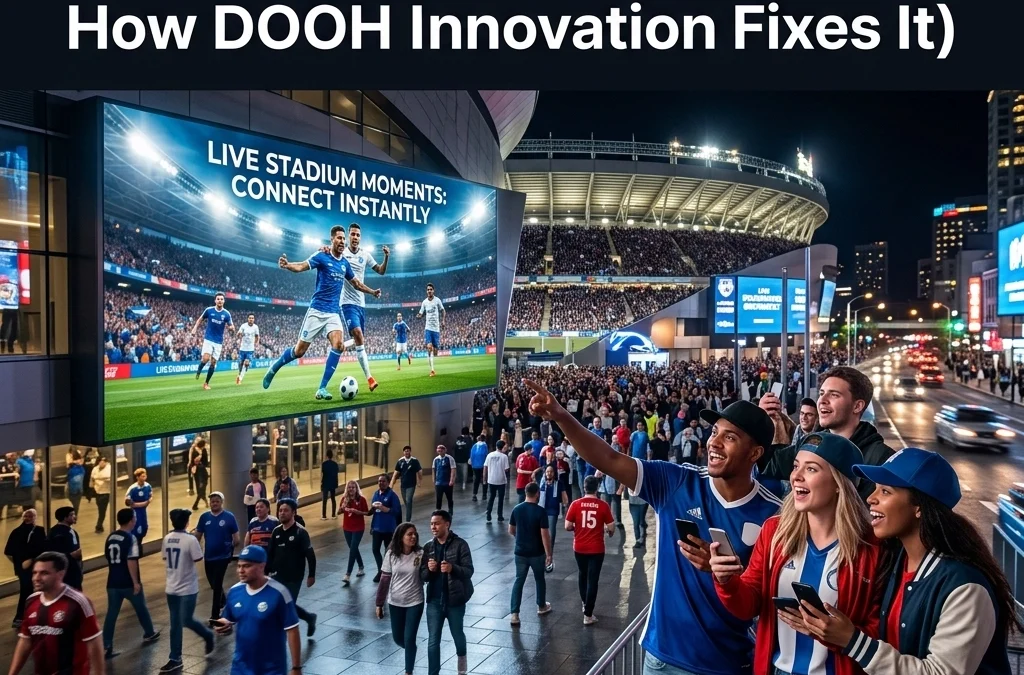
The landscape of sports marketing is undergoing a significant transformation. Traditional methods that once dominated the industry, such as static stadium signage and broad television commercials, are no longer yielding the same returns for brand managers and media buyers. As fan behavior shifts toward digital platforms and real-time engagement, the strategies used to reach them must also evolve.
Digital Out-of-Home (DOOH) advertising has emerged as a primary solution to the inefficiencies of legacy sports marketing. By utilizing data, programmatic buying, and dynamic creative, DOOH allows brands to connect with fans in a way that is both measurable and highly relevant. Here are ten reasons why current sports ad strategies often fail and how DOOH innovation provides a necessary fix.
1. Prohibitive Entry Costs of Traditional Sponsorships
For many years, the primary way to advertise in sports was through multi-million dollar stadium sponsorships. These deals often require long-term commitments and massive upfront capital, which can exhaust a marketing budget quickly. This high barrier to entry excludes many brands from participating in the sports ecosystem.
DOOH innovation addresses this by offering a more accessible entry point. Brands can now scale their presence using perimeter DOOH assets for significantly less than the cost of a full stadium takeover. This allows smaller or mid-sized brands to compete for fan attention without the financial burden of a legacy sponsorship. More information on this shift can be found in the analysis of how smart brands scale with perimeter DOOH for 80 percent less.
2. Static Messaging in a Rapidly Changing Environment
Sports are unpredictable. A game can change in a matter of seconds, yet many ad strategies rely on static creative that remains the same regardless of what is happening on the field. If a brand is running a celebratory ad while the home team is losing by thirty points, the message feels tone deaf and loses its impact.
DOOH fixes this through dynamic creative optimization. Advertisements can be programmed to change based on real-time triggers such as score updates, weather conditions, or player milestones. This ensures the brand message is always aligned with the current mood of the fans.
3. Inability to Target Fans Geographically
Traditional sports advertising often casts a wide net, reaching people who may not be in a position to take immediate action. A television spot reaches viewers across a whole region, many of whom are not actually attending the game or visiting sports-centric locations.
Innovations in DOOH allow for precise geographical targeting. Advertisers can activate screens specifically around stadiums, sports bars, and transit hubs where fans congregate. Geographically targeted DOOH strategies have shown the ability to boost fan engagement by up to 90 percent by reaching the right people in the right place.

4. Measurement Based on Vague Estimates
A common frustration for media buyers is the lack of concrete data associated with traditional sports ads. Impressions for a stadium billboard are often calculated based on estimated attendance or broad traffic counts, providing little insight into actual brand lift or purchase intent.
DOOH introduces high-level analytics to the outdoor space. By using AI-powered measurement tools and mobile location data, brands can track exactly how many people were exposed to an ad and whether those individuals later visited a store or website. This eliminates the guesswork often found in sports marketing. Brands looking to stop wasting time on estimates can utilize AI-powered DOOH analytics to prove campaign success.
5. Lack of Operational Agility
In a traditional sports ad buy, creative often needs to be submitted weeks or months in advance. This lack of agility makes it impossible for brands to react to trending news or sudden changes in the market.
Programmatic DOOH allows for near-instant execution. Campaigns can be launched, paused, or adjusted in under 24 hours. This is particularly useful for industries like sports betting, where odds change by the hour. Detailed strategies for launching real-time sports betting DOOH campaigns highlight how this speed can lead to higher conversion rates.
6. Wasted Spend on Non-Relevant Audiences
Broad-reach strategies often result in significant "waste," where a brand pays to reach people who have zero interest in the product. In a traditional sports broadcast, a luxury car brand might be paying to reach a demographic that cannot afford the vehicle.
DOOH uses audience data to ensure ads are only displayed when the target demographic is most likely to be present. By focusing on specific times and locations, media buyers can optimize their budget and ensure every dollar is spent reaching a relevant consumer.
7. Fragmented Fan Attention
Fans are no longer just looking at the field or the television. They are checking scores on their phones, posting to social media, and interacting with various digital touchpoints during the game. A strategy that only uses one channel will likely be missed.
DOOH acts as a bridge in an omnichannel strategy. By placing digital screens in the physical world and syncing them with mobile retargeting, brands can create a surround-sound effect. This keeps the brand top of mind as fans move between their devices and the live environment.
8. Failure to Leverage the Sports Betting Boom
The rise of legalized sports betting has created a new category of highly engaged fans who crave real-time information. Traditional ads are too slow to keep up with the betting lifecycle.
Innovation in DOOH allows brands to integrate live odds directly into their creative. This provides immediate value to the fan and creates a direct path to a betting platform. This level of integration is a significant leap forward from the static "gamble responsibly" banners of the past.
9. Creative Burnout from Repetition
Seeing the same commercial three times during a single game leads to ad fatigue. Fans begin to tune out, and the brand's perception may even take a negative turn due to the annoyance of repetition.
DOOH allows for a rotation of multiple creative assets within a single campaign. Because the platforms are digital, brands can test different headlines, visuals, and calls to action without incurring additional printing costs. This keeps the messaging fresh throughout the duration of a tournament or season.
10. Disconnect Between Ads and Purchase Points
A major weakness in traditional sports advertising is the distance between the ad and the point of sale. A fan may see an ad for a beverage during a game but forget about it by the time they go to the grocery store the next day.
DOOH solves this by placing ads in close proximity to retail locations. Screens at gas stations, grocery stores, and pharmacies can remind fans to pick up specific products right before they make a purchase. For example, White Claw's programmatic DOOH campaign drove a 74 percent lift in purchase consideration by effectively reaching consumers in the right context.

Strategic Implementation of DOOH
To fix a failing sports ad strategy, media buyers should focus on several key execution steps:
- Objective & Strategy: Define whether the goal is broad brand awareness or specific bottom-funnel conversions. DOOH can handle both, but the creative and placement must match the objective.
- Technology Partners: Collaborate with platforms that offer robust programmatic capabilities and AI-driven measurement. Utilizing a DSP like StackAdapt can help in driving programmatic DOOH adoption across omnichannel campaigns.
- Data Integration: Use first-party and third-party data to inform where and when ads should run. This includes using device ID data to understand fan movement patterns.
- Measurement and Attribution: Move beyond impressions. Focus on brand lift studies, foot traffic attribution, and sales data to determine true ROI.
Proven Results in the Field
The effectiveness of moving away from traditional strategies toward DOOH is backed by data from various successful campaigns.
- AB InBev's Mike's Hard Iced Tea: This campaign saw a 119 percent lift in positive brand image by utilizing a programmatic approach that targeted relevant consumer moments.
- Sea-Doo: By launching its first digital OOH campaign, the brand increased purchase consideration by 144 percent.
- Nike: During the NYC Marathon, Nike used DOOH to create a massive presence despite not being an official sponsor, proving that smart DOOH placement can rival official sponsorships.
The Future of Sports Marketing
The shift toward DOOH is not a temporary trend. Experts predict that DOOH sports advertising will continue to capture a larger share of the market as traditional formats decline. By 2030, the industry is expected to reach significant milestones in global spend. Brands that adopt these innovations now will be better positioned to capture fan attention in an increasingly crowded marketplace.
By moving away from static, expensive, and unmeasurable legacy strategies, media buyers can finally achieve the precision and impact they need. DOOH innovation is not just an alternative to traditional sports ads. It is a necessary upgrade for any brand that wants to remain relevant in the modern sports world.